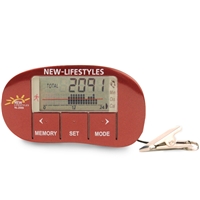
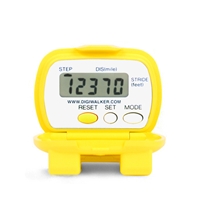
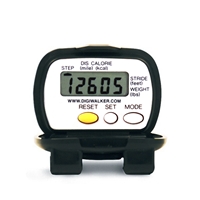
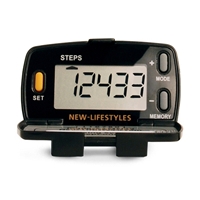
From Tommy Thompson to Ronald McDonald™, everyone seems to be step counting these days. But what separates the tools from the trinkets? Let's look inside popular pedometers and find out.  
Dr. Hatano has encouraged the benefits of 10,000 steps since 1965.


Many report that historic figures like Leonardo Da Vinci and Thomas Jefferson attempted to invent an accurate pedometer to help make maps and measure distances.

The modern pedometer appeared in the mid 1960s. Combined with the 1964 Olympics in Japan and its focus on physical activity, the pedometer became a successful motivational tool for millions of Japanese. The term "Manpo-kei" in Japanese, generally attributed to the enthusiastic Dr. Yoshiro Hatano, literally translates to "10,000 steps meter." The Japanese government set an industrial standard that any pedometer sold in Japan must be accurate within 3% of actual steps taken. This easily explains why many of the accurate pedometers today are designed by Japanese engineers and produced in Japanese factories.

The Western obesity epidemic continued to worsen. Despite the CDC's recommendations, we continued to grow less and less active. Researchers at the Cooper Institute, looking for an alternative to population surveys to measure (in)activity, finally found the Japanese pedometer. The market for these devices grew rapidly as researchers found them to be inexpensive and reliable tools to measure activity while the consumer market found them to be excellent motivational tools.

Researchers continue to study the motivational effect of pedometers and the benefits of the 10,000 step movement. The goal now focuses on correcting our improper balance of over-consumption and inactivity to achieve energy balance and hopefully curb the Manifest Destiny of our waistlines.

JSC Engineering LLC is an Electrical Engineering Consultant Group specializing in product design & performance testing.

© 2008 JSC Engineering, LLC. Direct reprint requests to webmaster@pedometers.com.